
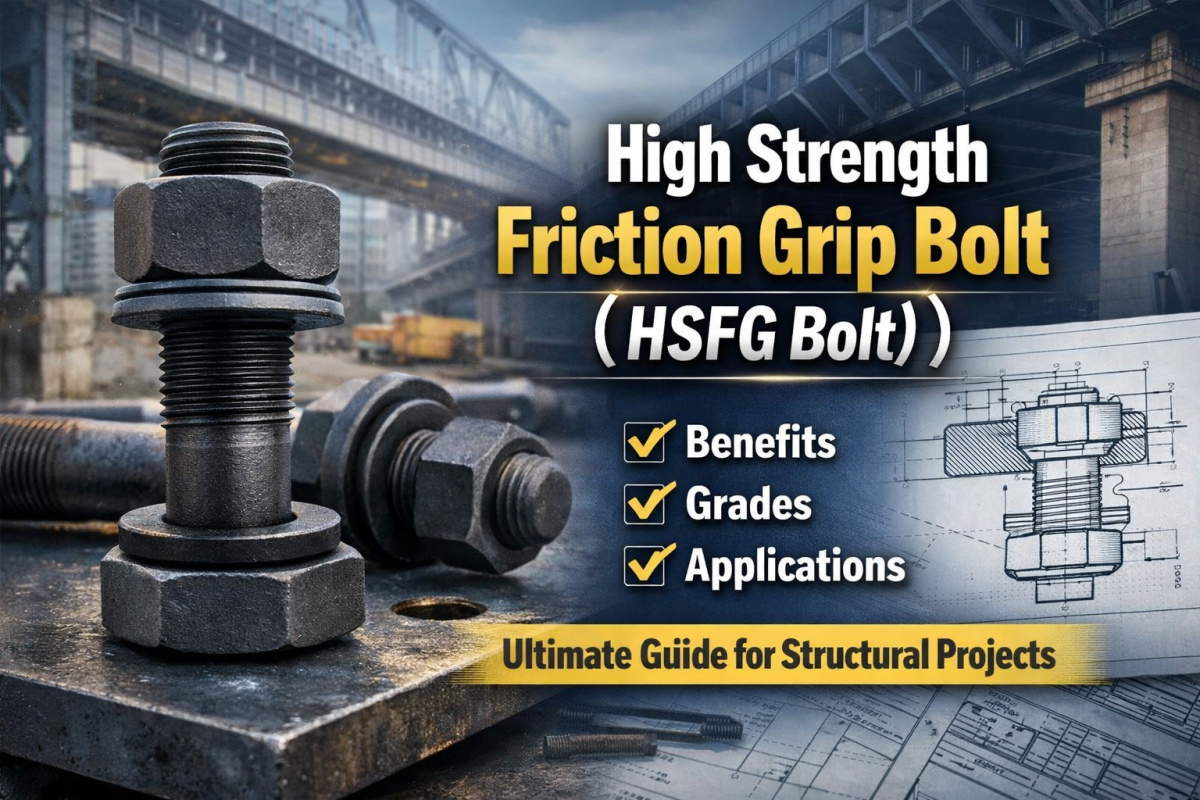
In modern structural engineering and steel construction, the reliability of fastening systems is critical to the safety and durability of a structure. One of the most widely used fasteners for high-load structural connections is the High Strength Friction Grip Bolt (HSFG Bolt).
HSFG bolts are specially designed high-strength bolts used in steel structures where strong and slip-resistant connections are required. These bolts are commonly used in bridges, buildings, heavy machinery, and infrastructure projects.
This article explains everything you need to know about HSFG bolts, including their benefits, grades, specifications, and common industrial applications.
What is a High Strength Friction Grip Bolt (HSFG Bolt)?
A High Strength Friction Grip Bolt, often abbreviated as HSFG bolt, is a high-tensile bolt designed to create strong frictional connections between structural steel components.
Unlike ordinary bolts that rely primarily on shear strength, HSFG bolts work by applying high clamping force between steel plates. This clamping force generates friction that prevents movement between the connected components.
The key principle behind HSFG bolts is friction grip, which means the load is transferred through friction between surfaces rather than through the bolt shank.
This design significantly reduces the risk of bolt loosening or structural slip, making HSFG bolts ideal for heavy-duty structural applications.
How HSFG Bolts Work
HSFG bolts function based on pre-tensioning during installation. When tightened using a calibrated torque wrench or specialized tightening method, the bolt generates high clamping force between the joined surfaces.
This process creates a frictional resistance between steel plates, preventing any movement even under heavy loads or vibrations.
The main components of an HSFG bolted connection typically include:
-
High strength bolt
-
Heavy hex nut
-
Hardened washer
When installed correctly, the connection behaves as a slip-resistant joint, which is essential in structural engineering.
Key Benefits of High Strength Friction Grip Bolts
HSFG bolts offer several advantages compared to conventional bolts. These benefits are the reason they are widely used in large-scale construction projects.
1. High Structural Strength
HSFG bolts are manufactured using high-tensile steel, allowing them to withstand significant loads and stresses. This makes them suitable for structural steel connections where strength and stability are crucial.
2. Slip-Resistant Connections
Because HSFG bolts rely on friction between steel surfaces, they prevent slippage between structural members. This improves the overall safety and performance of the structure.
3. Excellent Vibration Resistance
Structures such as bridges, industrial platforms, and heavy machinery are exposed to constant vibration. HSFG bolts maintain strong clamping force, reducing the risk of loosening over time.
4. Improved Structural Safety
The friction-based load transfer minimizes stress on the bolt shank. This reduces the risk of fatigue failure, which can occur in traditional shear-based bolted joints.
5. Ideal for Heavy Construction
HSFG bolts are specifically designed for large structural projects, making them ideal for modern steel construction.
HSFG Bolt Grades and Standards
HSFG bolts are manufactured according to international standards to ensure consistent strength and reliability.
Some of the most commonly used HSFG bolt grades include:
Grade 8.8
Grade 8.8 HSFG bolts are widely used in general structural steel applications.
Characteristics:
-
Medium carbon steel
-
High tensile strength
-
Suitable for building structures and industrial frames
Grade 10.9
Grade 10.9 HSFG bolts provide even higher tensile strength and are used in heavy structural applications.
Characteristics:
-
Higher load capacity
-
Suitable for bridges and heavy engineering
-
Excellent fatigue resistance
Common HSFG Bolt Standards
Several international standards regulate the production and specification of HSFG bolts.
ASTM A325
ASTM A325 bolts are commonly used in structural steel connections in the United States and international projects.
ASTM A490
ASTM A490 bolts are higher strength bolts used in heavy structural applications where additional strength is required.
EN 14399
This European standard covers high strength structural bolting assemblies for preloading.
ISO Standards
International ISO standards ensure compatibility and reliability in global construction projects.
Applications of High Strength Friction Grip Bolts
HSFG bolts are used in a wide range of structural and industrial applications due to their high reliability and strength.
Steel Structure Buildings
High-rise buildings and steel-frame structures rely heavily on HSFG bolts for strong and stable connections between steel beams and columns.
Bridges
Bridges experience dynamic loads from traffic and environmental conditions. HSFG bolts provide the slip-resistant connections required for bridge safety.
Industrial Plants
Power plants, refineries, and manufacturing facilities use HSFG bolts for structural frameworks and heavy equipment support.
Infrastructure Projects
Large infrastructure projects such as stadiums, airports, and transportation hubs often require high-strength bolting systems.
Heavy Machinery and Equipment
HSFG bolts are also used in heavy mechanical assemblies where strong and vibration-resistant connections are essential.
HSFG Bolt Installation Methods
Proper installation is critical to achieving the required performance of HSFG bolts. Several tightening methods are commonly used.
Torque Control Method
This method uses a calibrated torque wrench to apply the specified tightening torque.
Turn-of-Nut Method
After initial tightening, the nut is rotated a specified angle to achieve the required bolt tension.
Tension Control Bolt Method
Some HSFG bolts are designed with special features that ensure accurate tension during installation.
Each method ensures that the bolt reaches the required preload tension to create a reliable friction grip joint.
HSFG Bolt vs Ordinary Bolt
Understanding the difference between HSFG bolts and standard bolts helps engineers choose the correct fastener for their project.
| Feature | HSFG Bolt | Ordinary Bolt |
|---|---|---|
| Load Transfer | Friction | Shear |
| Strength | Very High | Moderate |
| Slip Resistance | Excellent | Limited |
| Installation | Preloaded | Standard tightening |
| Application | Structural steel | General fastening |
In structural engineering, HSFG bolts are often preferred due to their superior strength and safety performance.
Choosing the Right HSFG Bolt Supplier
When selecting HSFG bolts for construction projects, quality and reliability are extremely important. Always choose a supplier that offers:
-
Certified materials
-
International standard compliance
-
Complete size availability
-
Quality inspection and testing
-
Reliable delivery for project timelines
Working with a trusted fastener supplier ensures that your structural connections meet safety and engineering requirements.
Conclusion
High Strength Friction Grip Bolts (HSFG bolts) are essential components in modern structural engineering. Their ability to create strong, slip-resistant connections makes them ideal for steel structures, bridges, infrastructure projects, and heavy industrial applications.
With benefits such as high tensile strength, vibration resistance, and improved structural safety, HSFG bolts continue to play a vital role in construction and engineering worldwide.