
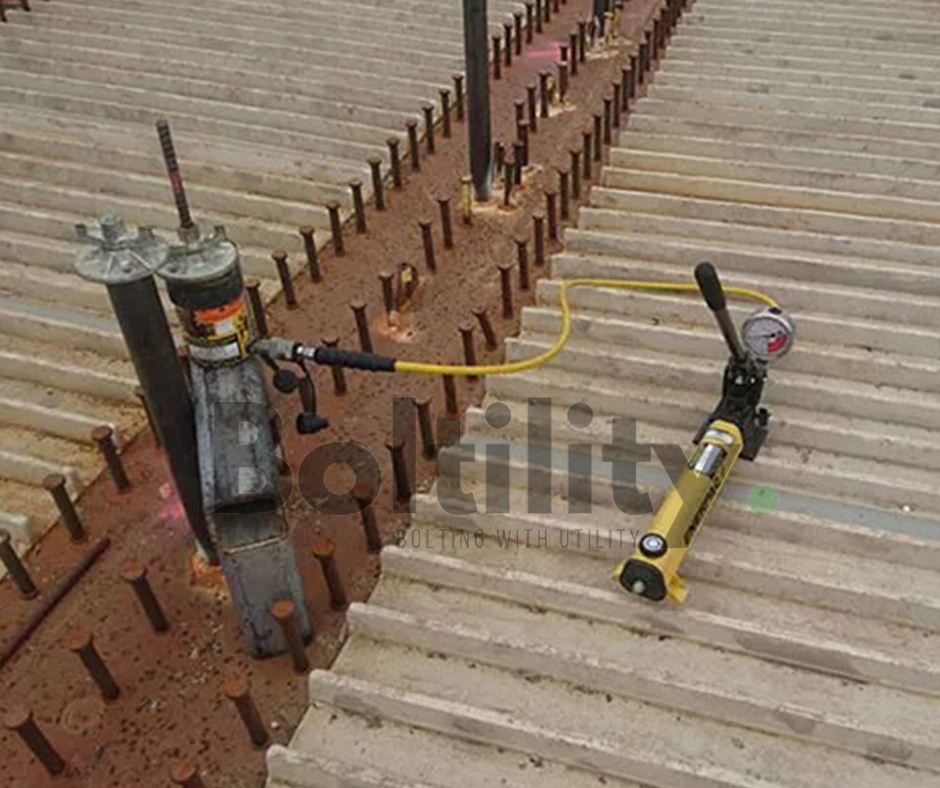
Pull Out Testing: Complete Guide to Anchor and Bolt Testing
Pull Out Testing is a commonly used method for verifying the tensile load capacity, installation quality and performance of anchors, bolts and other fixings installed into concrete or other substrates.
For construction and engineering projects, pull out testing can help determine whether an installed fixing can withstand the required test load. The test is particularly useful for post-installed anchors, chemical anchors, mechanical anchors, threaded rods, concrete screws and other critical fixings.
In Singapore, pull out testing may be specified as part of a project’s quality control, inspection or structural verification requirements. The exact test load, number of tests and acceptance criteria should be determined according to the project specifications, anchor manufacturer’s requirements and the responsible engineer’s instructions.
What Is Pull Out Testing?
Pull Out Testing is a controlled tensile load test performed on an installed anchor, bolt or fixing.
A calibrated testing system applies a pulling force to the fixing while the applied load and, where required, displacement are monitored. The purpose is to verify that the installation can resist the specified test load without unacceptable movement or failure.
The test can provide useful information about:
- Anchor load capacity
- Installation quality
- Bond strength
- Fixing performance
- Concrete or substrate condition
- Failure behaviour
- Compliance with project requirements
Pull out testing should not be confused with simply measuring the torque applied to a bolt. A pull out test directly applies tensile force to the installed fixing.
Why Is Pull Out Testing Important?
An anchor may appear correctly installed but still have inadequate capacity because of incorrect installation, insufficient embedment, poor hole cleaning, unsuitable substrate conditions or other factors.
Pull Out Testing provides a practical way to verify the installed fixing under a controlled tensile load.
Testing can help with:
1. Quality Control
Pull out testing can be used to verify the quality of installed anchors during construction and installation works.
2. Anchor Installation Verification
The test can help identify installations where the fixing has not achieved the required performance.
3. Structural Safety
For safety-critical fixings, testing can provide additional evidence that the installation can withstand the specified load.
4. Existing Building Assessment
Testing may be useful when new equipment, services, structures or fixtures are being attached to an existing concrete structure and the actual condition of the substrate needs to be verified.
5. Defect Investigation
Where there are concerns about anchor installation or substrate quality, pull out testing can help engineers investigate the performance of existing fixings.
What Types of Anchors Can Be Pull Tested?
The appropriate test method depends on the fixing type, substrate and project requirements.
Chemical Anchors
Chemical or resin anchors rely on a bonding system between the anchor, adhesive and surrounding substrate.
Pull out testing can help verify the performance of installed chemical anchors and identify installation problems such as inadequate hole cleaning, incorrect embedment or insufficient curing.
Mechanical Anchors
Mechanical anchors include various expansion and other mechanical fixing systems installed into concrete or masonry.
Testing can help verify the performance of installed mechanical anchors against the specified test load.
Anchor Bolts
Anchor bolts can be tested where verification of the installed fixing’s tensile performance is required.
Threaded Rods
Threaded rods installed with chemical adhesive or mechanical systems may also be subject to tensile pull testing.
Concrete Screws
Depending on the project requirements, concrete screws and other post-installed fixings may be tested to verify their installation performance.
Rebar and Reinforcement Connections
Post-installed reinforcing bars can be tested where the project requires verification of the bond and anchorage performance.
Pull Out Testing Process
Although the exact procedure varies depending on the anchor system and applicable test specification, a typical pull out test involves several stages.
Step 1: Identify the Test Requirements
Before testing begins, determine:
- Anchor type
- Anchor diameter
- Embedment depth
- Substrate type
- Required test load
- Number of anchors to test
- Test locations
- Acceptance criteria
- Required reporting format
The test requirements should be established by the project engineer, specification or applicable manufacturer documentation.
Step 2: Inspect the Anchor Installation
The anchor should be visually inspected before testing.
The tester or engineer may check:
- Anchor type
- Diameter
- Installation condition
- Exposed thread
- Embedment information where available
- Surrounding concrete condition
- Cracks or visible damage
Step 3: Position the Pull Out Testing Equipment
A suitable pull testing system is positioned over the anchor.
The equipment generally consists of a reaction frame, hydraulic loading system and calibrated load measurement device.
The equipment must be positioned correctly so that the applied force acts in the intended direction without introducing unnecessary side loading.
Step 4: Apply the Tensile Load
The load is increased according to the applicable test procedure.
The applied load is monitored throughout the test. Where displacement measurement is required, movement of the anchor is also recorded.
Step 5: Record the Test Result
The test records the relevant load and displacement information.
Depending on the test objective, the fixing may be tested to a specified proof load or loaded until failure to establish ultimate capacity.
Do not assume a universal test load or pass/fail value. The required load should be based on the project specification, design requirements, anchor system and instructions from the responsible engineer.
Step 6: Assess the Result
The test result is compared with the specified acceptance criteria.
Possible outcomes include:
- Passed specified proof load
- Excessive displacement
- Anchor pull-out
- Concrete cone failure
- Bond failure
- Steel failure
- Other substrate-related failure
The failure mode is important because the fixing itself is not always the weakest component. Failure may occur in the anchor, adhesive, concrete or surrounding substrate.
Pull Out Test Equipment
Professional pull out testing requires suitable and calibrated equipment.
Typical equipment can include:
Hydraulic Pull Tester
Provides the controlled tensile force required to test the anchor.
Load Cell
Measures the force applied to the fixing.
Reaction Frame
Transfers the reaction force to the surrounding substrate while allowing the anchor to be loaded.
Displacement Gauge
Measures anchor movement during the test where displacement monitoring is required.
Calibration Equipment and Records
Testing equipment should have appropriate calibration documentation where required by the project specification.
Using unsuitable, damaged or improperly calibrated equipment can affect the reliability of the test results.
Pull Out Testing Failure Modes
A pull out test does not simply determine whether an anchor “comes out.” Understanding the failure mode is an important part of interpreting the result.
Common failure modes can include:
Anchor Pull-Out
The fixing is withdrawn from the substrate without the surrounding concrete failing significantly.
Bond Failure
For adhesive anchors, failure can occur within the adhesive system or at the interface between the anchor, adhesive and substrate.
Concrete Cone Failure
The anchor causes a cone-shaped section of concrete to break away from the substrate.
Steel Failure
The anchor or threaded component reaches its tensile capacity and fails.
Excessive Displacement
The anchor may remain installed but move more than the permitted amount under the applied test load.
The responsible engineer should assess the failure mode and determine the appropriate corrective action.
Factors That Affect Pull Out Test Results
Several factors can influence anchor performance.
Embedment Depth
Insufficient embedment can reduce the capacity of an anchor.
Hole Diameter
For drilled anchors, the hole diameter should be suitable for the specified anchor system.
Hole Cleaning
Dust and debris can significantly affect the performance of adhesive and mechanical anchor systems.
Concrete Strength
The condition and strength of the surrounding concrete can influence the test result.
Edge Distance
Anchors installed too close to an edge may behave differently from anchors installed in a large area of concrete.
Anchor Spacing
Nearby anchors can influence load distribution and failure behaviour.
Installation Quality
Incorrect installation procedures can reduce the actual performance of an otherwise suitable anchor.
Curing Time
For chemical anchors, the adhesive must be allowed to cure according to the manufacturer’s requirements before loading.
Pull Out Testing for Construction Projects in Singapore
Pull Out Testing Singapore is relevant to a wide range of construction, renovation, infrastructure and engineering applications.
Testing may be considered for:
- Structural steel connections
- M&E equipment supports
- Pipe supports
- Cable tray supports
- Façade and cladding systems
- Handrails and barriers
- Canopies
- Signage
- Brackets
- Rooftop equipment
- Post-installed reinforcement
- Concrete anchors
- Chemical anchors
- Mechanical anchors
The testing requirements will vary from project to project. Contractors should follow the project specifications and obtain the required approval from the relevant engineer or consultant.
Pull Out Testing vs Torque Testing
Pull out testing and torque testing are different methods.
Pull Out Testing applies a tensile force directly to the installed fixing to evaluate its response to the specified load.
Torque Testing measures or verifies the tightening torque applied to a fastener or anchor.
Torque testing does not automatically provide the same information as a tensile pull test.
The appropriate test method depends on the anchor type, design and project requirements.
Proof Load Testing vs Destructive Pull Out Testing
Not every pull out test is intended to destroy the anchor.
Proof Load Testing
A proof load test applies a specified load to confirm that the installed fixing can withstand the required test load without unacceptable movement or failure.
The fixing may remain in service after a successful proof test, subject to the applicable project requirements.
Destructive Testing
A destructive test continues loading until the fixing or surrounding substrate fails.
This can provide information about ultimate capacity and failure mode.
The responsible engineer should determine whether proof testing or destructive testing is appropriate.
What Should a Pull Out Test Report Include?
A professional Pull Out Testing report should provide enough information for the results to be independently understood and reviewed.
Depending on project requirements, a report may include:
- Project name
- Test location
- Date of testing
- Anchor identification
- Anchor type
- Anchor diameter
- Substrate type
- Embedment depth where available
- Test load
- Maximum applied load
- Displacement measurements where applicable
- Failure mode
- Test equipment details
- Calibration information
- Test result
- Pass/fail assessment against the specified criteria
- Photographs
- Testing personnel
- Engineer or consultant requirements
Clear documentation is particularly important for construction quality records and project handover.
Common Pull Out Testing Problems
Several issues can affect the reliability of testing.
Incorrect Equipment Setup
Poor alignment or incorrect positioning of the testing equipment can influence the applied load.
Insufficient Anchor Information
Without knowing the anchor type, size, embedment and required test load, it can be difficult to establish an appropriate testing procedure.
Poor Installation
Incorrect drilling, inadequate hole cleaning, insufficient embedment or premature loading can reduce anchor performance.
Damaged Concrete
Cracks, honeycombing or weak concrete around the anchor can affect the test result.
Incorrect Test Criteria
A test should not use an arbitrary pass/fail value. Acceptance criteria should come from the relevant design, project specification, manufacturer requirements or responsible engineer.
When Should You Carry Out Pull Out Testing?
Pull out testing may be considered:
- During construction
- After anchor installation
- Before loading newly installed fixings
- During quality assurance inspections
- When investigating suspected installation defects
- During renovation or alteration works
- When installing equipment on existing concrete
- When required by the project consultant or structural engineer
The appropriate testing frequency depends on the project requirements and should not be assumed to be the same for every installation.
Why Choose Professional Pull Out Testing?
Professional testing provides more than simply applying force to an anchor.
A properly planned test considers the fixing type, substrate, required load, equipment, test method, measurement and reporting requirements.
For construction projects, clear test documentation can also help contractors, consultants and engineers maintain a reliable quality-control record.
Pull Out Testing Singapore
Need Pull Out Testing for anchors, bolts, chemical anchors, mechanical anchors or other post-installed fixings in Singapore?
Boltility provides construction and fastening solutions for commercial, industrial and engineering applications.
If your project requires anchor testing, contact Boltility with the following information:
- Project location
- Anchor or bolt type
- Anchor size
- Number of anchors
- Substrate type
- Required test load, if specified
- Project or consultant requirements
Our team can discuss the appropriate testing requirements for your project.
Frequently Asked Questions About Pull Out Testing
What is a pull out test?
A pull out test is a controlled tensile load test used to assess the performance of an installed anchor, bolt, rebar or other fixing in a substrate.
Why do anchors need pull out testing?
Testing can help verify installation quality and determine whether an installed fixing can withstand the specified test load.
What anchors can be pull tested?
Depending on the test equipment and requirements, chemical anchors, mechanical anchors, concrete screws, threaded rods, anchor bolts and post-installed reinforcement can be tested.
Is pull out testing destructive?
Not necessarily. A proof load test may test an anchor to a specified load without causing failure. Destructive testing can continue until the anchor or substrate fails.
How is a pull out test performed?
A calibrated tensile testing system is attached to the installed fixing. A controlled tensile load is applied while the load and, where required, displacement are monitored.
What causes an anchor to fail a pull out test?
Possible causes include insufficient embedment, poor hole cleaning, incorrect installation, unsuitable substrate conditions, inadequate curing, excessive edge effects, bond failure, concrete failure or steel failure.
How is a pull out test passed?
The acceptance criteria depend on the project requirements. An anchor should not be considered “passed” based on a generic load value. The required test load and acceptance criteria should be established by the responsible engineer, project specification or applicable anchor system requirements.
Do pull out tests apply to concrete anchors?
Yes. Pull out testing is commonly used to verify the performance of post-installed anchors installed into concrete, although the exact test method depends on the anchor system and project requirements.
Do I need pull out testing for my project in Singapore?
It depends on the project, fixing system, design requirements and consultant or engineer specifications. Where anchor performance is safety-critical or verification is required, pull out testing may form part of the project’s quality assurance process.
Contact Boltility for Pull Out Testing Requirements
If you require Pull Out Testing in Singapore for anchors, bolts, chemical anchors, mechanical fixings or post-installed reinforcement, contact Boltility to discuss your project.
Provide your anchor type, size, quantity, substrate and required test load where available so the appropriate testing requirements can be assessed.