
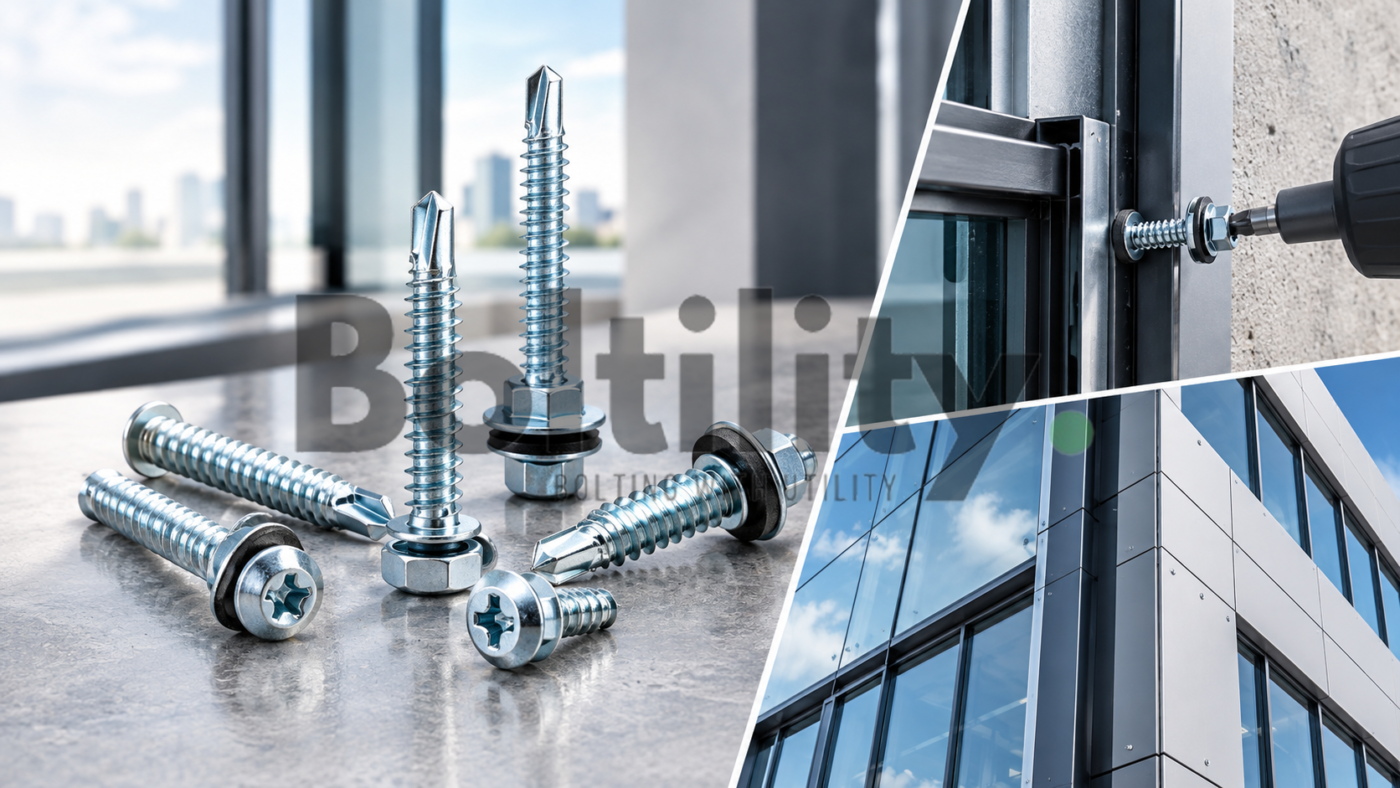
Window and Facade Screws Singapore | Construction Fasteners
Modern construction projects require reliable fastening solutions to ensure the stability, durability, and performance of building components. From aluminium window frames to exterior cladding and facade systems, selecting the right screws is essential for achieving secure installations and long-lasting results.
Window and facade screws are important construction fasteners designed for various window installation, metal framing, and building envelope applications. Depending on their design, material, and specifications, these screws can provide reliable fastening performance for residential, commercial, and industrial projects.
For contractors, builders, architects, facade specialists, and procurement teams looking for window and facade screws in Singapore, choosing suitable fasteners can help improve installation efficiency, reduce maintenance requirements, and support the overall quality of a building project.
Boltility provides fastening solutions for construction and industrial applications, helping customers identify suitable products for their project requirements.
What Are Window and Facade Screws?
Window and facade screws are fasteners used to secure window frames, facade components, metal profiles, and other building materials. They are available in different head styles, thread configurations, materials, coatings, and dimensions to accommodate different installation requirements.
Unlike general-purpose screws, fasteners selected for window and facade applications must be compatible with the materials being joined and the environmental conditions in which they will be installed.
Common applications include:
- Aluminium window frames
- Metal door and window assemblies
- Facade cladding systems
- Curtain wall components
- Metal framing and support structures
- Architectural panels
- Building envelope installations
- Commercial and residential construction
The correct screw depends on the substrate, required holding capacity, exposure conditions, and installation method.
Why Are the Right Window and Facade Screws Important?
Choosing suitable fastening products is an important part of construction planning. Incorrect screw selection may cause installation difficulties, material damage, corrosion, or inadequate fastening performance.
High-quality, application-appropriate window and facade screws can provide several benefits.
1. Secure and Reliable Fastening
The correct screw design helps create a secure connection between compatible materials. Thread type, screw diameter, length, and substrate characteristics all influence fastening performance.
2. Improved Installation Efficiency
Self-drilling and self-tapping screws can simplify certain installation processes by reducing the need for separate drilling or thread-cutting operations, depending on the application.
3. Corrosion Resistance
Window and facade components may be exposed to rain, humidity, condensation, and outdoor pollutants. Selecting a suitable material or protective coating can help reduce corrosion and extend service life.
4. Professional Appearance
Appropriate head styles and finishes help achieve a neat appearance, especially where fasteners remain visible on architectural components.
5. Long-Term Performance
Correctly specified and installed fasteners can help reduce premature failures, maintenance work, and replacement costs throughout the service life of a building.
Types of Window and Facade Screws
Different construction projects require different screw designs. Understanding the available options helps contractors select the most suitable fastener.
Self-Drilling Screws
Self-drilling screws feature a drill-shaped point designed to penetrate suitable materials without a separate pilot hole, within the screw’s specified drilling capacity.
They are commonly used for:
- Metal framing
- Thin steel profiles
- Sheet metal assemblies
- Selected facade support components
- Metal-to-metal fastening
When selecting self-drilling screws, consider the combined thickness and hardness of the materials, drilling capacity, thread engagement, and required corrosion protection.
Self-Tapping Screws
Self-tapping screws form or cut threads in a prepared hole or suitable substrate, depending on their design.
They may be used for aluminium profiles, metal components, and other compatible materials. The appropriate pilot-hole diameter and screw specification should be checked before installation.
Stainless Steel Screws
Stainless steel screws are commonly selected where corrosion resistance is important.
Stainless Steel 304 is suitable for many general applications, subject to environmental conditions.
Stainless Steel 316 offers improved resistance to chloride-related corrosion and may be more appropriate for coastal or marine-exposed environments.
The required grade should be determined by the actual exposure conditions, material compatibility, and project specifications.
Facade Fixing Screws
Facade fixing screws are selected for securing compatible cladding panels, facade components, and supporting elements.
Their specifications may vary according to the facade material, support structure, design loads, and installation system. For safety-critical facade applications, use fasteners approved for the particular system and project.
Aluminium Window Screws
Window installation may require screws specifically suited to aluminium profiles, steel reinforcement, or other frame materials.
The correct screw must provide suitable thread engagement without damaging the profile or interfering with other window components.
How to Choose the Right Window and Facade Screws
Selecting the correct fastening solution requires careful consideration of several factors.
1. Identify the Base Material
First, determine the materials being joined. These may include aluminium, carbon steel, stainless steel, composite panels, or other construction materials.
A screw designed for one substrate may not perform properly in another. Always verify material compatibility and the manufacturer’s recommendations.
2. Select the Appropriate Screw Size
Screw diameter and length influence thread engagement and fastening performance.
When choosing a size, consider:
- Thickness of the materials being joined
- Required thread engagement
- Available installation space
- Risk of penetrating adjacent components
- Product-specific installation requirements
Avoid choosing screw dimensions based solely on appearance or convenience.
3. Consider the Head Style
Common screw head styles include:
- Pan head: A rounded profile suitable for many general fastening applications.
- Countersunk head: Designed to sit flush when used with a compatible countersunk surface.
- Hex washer head: Provides a hexagonal driving surface and an integrated washer-style bearing area.
- Wafer head: Features a broad, relatively low-profile head for selected fastening applications.
The appropriate head style depends on the required clamping area, clearance, appearance, and installation method.
4. Evaluate Environmental Exposure
Singapore’s humid climate and frequent rainfall make corrosion protection an important consideration for exterior construction.
For outdoor installations, evaluate the expected moisture exposure, proximity to the coast, pollutants, and contact with dissimilar metals.
The selected screw material or coating should suit the specific conditions. Stainless steel does not eliminate every corrosion risk, particularly where incompatible materials or unfavourable installation conditions are present.
5. Check Load and Performance Requirements
Facade and window fastening systems may experience wind pressure, vibration, thermal movement, and other forces.
Fasteners for critical applications should be selected according to the approved design, manufacturer data, and relevant engineering requirements. Do not assume that a standard construction screw is suitable for structural or overhead use.
6. Confirm Installation Requirements
Before installation, check the recommended driver, installation torque, pilot-hole requirements, edge distances, spacing, and any sealing or waterproofing details.
Correct installation is essential to help maintain the performance of the complete window or facade system.
Applications of Window and Facade Screws in Singapore
Window and facade screws are used across a variety of construction and building projects.
Residential Buildings
Residential applications may include aluminium window frames, door assemblies, metal profiles, and selected exterior architectural components.
The fastener must be compatible with the window system and suitable for the exposure conditions.
Commercial Buildings
Offices, shopping centres, hotels, and mixed-use developments often use aluminium windows, curtain walls, and architectural cladding.
These installations require careful fastener selection to support the intended performance and appearance of the building envelope.
Industrial Facilities
Factories, warehouses, and industrial buildings may use screws for metal framing, sheet metal assemblies, and compatible facade components.
Material selection should account for the operating environment and potential chemical or moisture exposure.
Facade and Cladding Projects
Exterior cladding systems require fasteners suited to the panel material and supporting structure. The fastening arrangement must accommodate the design loads and any specified thermal movement.
For complex or high-rise facade systems, follow the approved facade design and the fastener system manufacturer’s technical guidance.
Common Mistakes to Avoid When Selecting Facade Screws
Incorrect fastening choices can create unnecessary installation and maintenance problems.
Common mistakes include:
- Choosing the wrong screw length or diameter
- Using an unsuitable material or coating for outdoor exposure
- Ignoring compatibility between dissimilar metals
- Using self-drilling screws beyond their specified drilling capacity
- Applying excessive installation torque
- Failing to follow the approved facade system design
- Assuming that all stainless steel grades have identical corrosion resistance
Reviewing these factors before ordering can help improve product suitability and reduce avoidable errors on site.
Why Choose Boltility for Construction Fasteners in Singapore?
Boltility serves construction and industrial fastening requirements with solutions for different applications.
When sourcing window and facade screws, contractors and purchasing teams should consider product suitability, specification accuracy, availability, and supplier support.
Boltility can assist customers with enquiries regarding:
- Window and facade fastening requirements
- Screw types and dimensions
- Stainless steel and coated fasteners
- Self-drilling and self-tapping screws
- Construction and industrial fasteners
- Product availability and quotation requests
For the best results, provide your project details, base material, required screw dimensions, material grade, finish, and estimated quantity when requesting a quotation.
This information helps identify products that are appropriate for the intended application.
Frequently Asked Questions
What are window and facade screws used for?
Window and facade screws are used to fasten compatible window frames, metal profiles, facade panels, cladding components, and other building elements. The correct product depends on the substrate and application.
Which screws are suitable for aluminium window frames?
The appropriate screw depends on the aluminium profile, any steel reinforcement, material thickness, and system design. Use a screw specified for the particular window assembly rather than selecting by material alone.
Are stainless steel screws suitable for outdoor facades?
Stainless steel screws can be suitable for many outdoor applications. The appropriate grade depends on the exposure conditions, especially in coastal environments, and compatibility with the other materials in the assembly.
What is the difference between self-drilling and self-tapping screws?
Self-drilling screws have a drill-point tip designed to create a hole in suitable materials. Self-tapping screws form or cut threads in a suitable substrate or prepared hole. Their capabilities depend on the particular design.
How do I select the correct facade screw size?
Consider the base material, combined material thickness, required thread engagement, design loads, installation space, and manufacturer specifications. For critical facade applications, follow the approved engineering design.
Where can I source window and facade screws in Singapore?
Boltility provides construction and industrial fastening solutions. Contact the team with your application details and product specifications to enquire about suitable options and availability.
Conclusion
Choosing the right window and facade screws in Singapore is an important step in achieving reliable window installations, facade assemblies, and construction projects.
Material compatibility, screw dimensions, head style, corrosion resistance, load requirements, and installation procedures all influence fastening performance. Taking these factors into account helps contractors and construction professionals select suitable products for their applications.
Boltility supports construction and industrial fastening requirements with a range of fastening solutions. Whether you need screws for aluminium window frames, metal profiles, facade components, or other compatible building applications, provide your technical specifications to help identify the right product.
Contact Boltility today to enquire about window and facade screws, product availability, and construction fastener quotations in Singapore.