
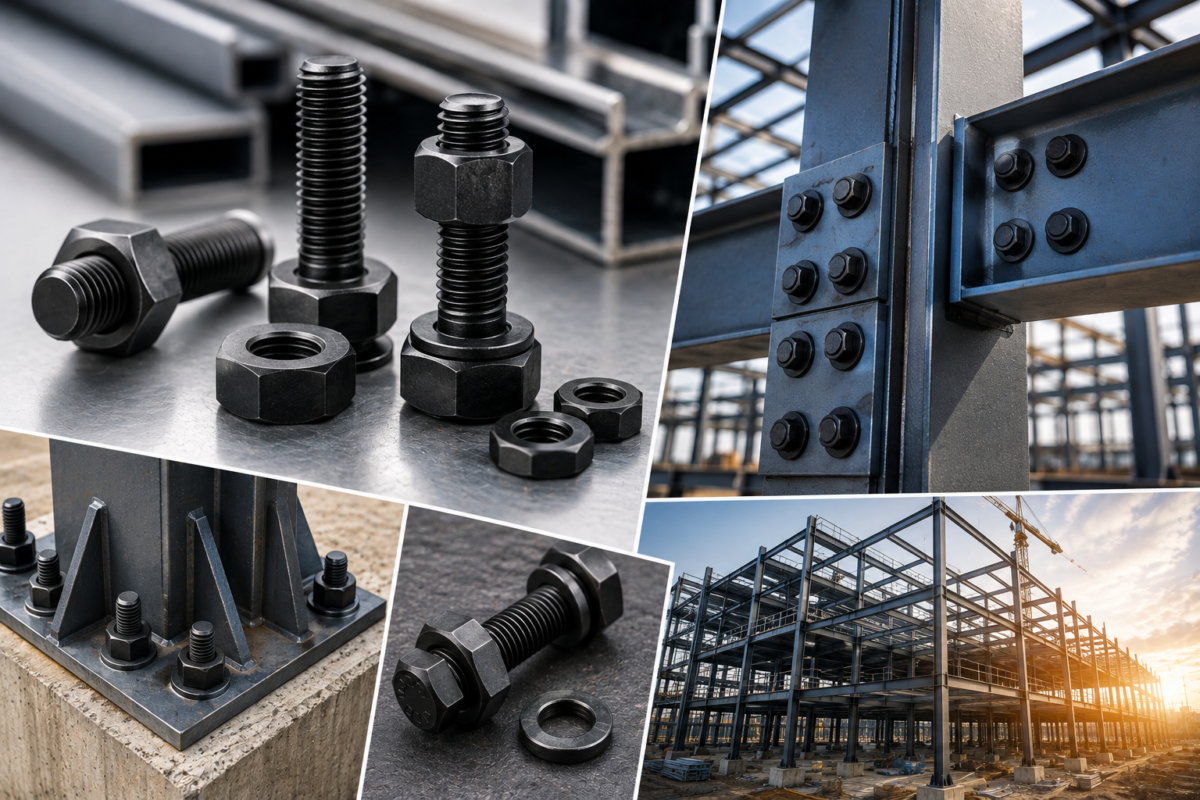
In modern steel construction, reliable structural connections are essential for maintaining the strength, stability, and safety of a building or infrastructure project. One of the most effective fastening solutions for demanding structural applications is the High Strength Friction Grip Bolt, commonly known as an HSFG Bolt.
HSFG bolts are specifically designed to create strong friction-based connections between structural steel components. Unlike conventional bolts that primarily rely on the bolt shank and bearing against the connected materials, HSFG connections use controlled bolt tension to clamp steel plates together. The resulting friction between the surfaces helps resist external loads and movement.
For construction companies, structural steel fabricators, engineers, and contractors, selecting the right High Strength Friction Grip Bolt is important for achieving a secure and durable structural connection.
What Is a High Strength Friction Grip Bolt?
A High Strength Friction Grip Bolt (HSFG Bolt) is a high-strength structural bolt used to connect steel components through friction generated between tightly clamped surfaces.
During installation, the bolt is tightened to achieve a specified preload. This preload creates a strong clamping force between the connected steel plates. When an external load is applied, the friction between the surfaces helps prevent relative movement.
HSFG bolts are commonly used where structural connections need to withstand significant loads, vibration, and dynamic forces.
How Does an HSFG Bolt Work?
The working principle of an HSFG connection is based on preload and friction.
When the bolt is properly tightened:
- The bolt generates a high clamping force.
- The connected steel plates are compressed together.
- Friction develops between the contact surfaces.
- External shear forces are resisted primarily through this friction.
- The connection remains stable under demanding structural loads.
This makes HSFG bolts particularly suitable for applications where movement between connected steel components must be minimized.
Key Benefits of High Strength Friction Grip Bolts
1. High Structural Strength
HSFG bolts are manufactured from high-strength materials and are designed for demanding structural connections.
2. Excellent Resistance to Movement
The friction generated between steel surfaces helps prevent slipping and movement under applied loads.
3. Suitable for Dynamic Loads
HSFG connections are commonly used in structures exposed to vibration, repeated loading, and changing forces.
4. Reliable Long-Term Performance
When correctly specified and installed, HSFG bolts can provide dependable structural performance over an extended service life.
5. Reduced Risk of Connection Slippage
The high preload generated during installation helps maintain the integrity of the connection.
Common Applications of HSFG Bolts
High Strength Friction Grip Bolts are widely used in structural steel and infrastructure projects, including:
- Structural steel buildings
- High-rise buildings
- Steel bridges
- Industrial facilities
- Steel towers
- Railway structures
- Heavy machinery structures
- Infrastructure projects
- Commercial buildings
- Steel frame construction
They are particularly useful in applications where structural stability and resistance to movement are critical.
HSFG Bolts for Structural Steel Connections
Structural steel connections must transfer significant forces between beams, columns, plates, and other components. HSFG bolts provide an effective solution where a high-preload connection is required.
Typical applications include:
Beam-to-Column Connections
HSFG bolts can be used to create strong connections between structural beams and columns.
Beam Splices
When two structural steel members need to be joined, high-strength friction grip connections can provide reliable load transfer.
Column Connections
Bolted column connections can benefit from high-strength bolts where structural stability is critical.
Bridge Connections
HSFG bolts are commonly considered for bridge structures because of their ability to handle demanding loads and dynamic conditions.
HSFG Bolt vs Conventional Structural Bolt
One of the main differences between an HSFG connection and a conventional bearing-type connection is how the applied load is transferred.
A conventional structural bolt connection may allow some movement until the bolt comes into contact with the sides of the hole. In an HSFG connection, the high preload creates friction between the steel surfaces, allowing the connection to resist movement before significant slip occurs.
Therefore, HSFG bolts are particularly useful when controlling movement and maintaining connection stiffness are important design considerations.
Choosing the Right High Strength Friction Grip Bolt
Several factors should be considered when selecting HSFG bolts for a project.
Bolt Grade
The required bolt grade should be determined based on the structural design and applicable engineering standards.
Bolt Diameter
Common structural bolt sizes include M16, M20, M22, M24, M27, and M30, although availability may vary depending on the application and specification.
Bolt Length
The correct bolt length is necessary to ensure sufficient thread engagement and proper installation.
Connection Design
Engineers should consider:
- Applied loads
- Shear forces
- Tensile forces
- Slip resistance
- Plate thickness
- Hole diameter
- Required preload
Environmental Conditions
For outdoor or corrosive environments, the appropriate coating or corrosion protection should be selected based on the project requirements.
Proper Installation of HSFG Bolts
Correct installation is essential to achieving the required performance of an HSFG connection.
The installation process typically involves:
- Preparing the steel connection surfaces.
- Aligning the structural components.
- Installing the HSFG bolt, nut, and washer as specified.
- Tightening the bolt to achieve the required preload.
- Verifying the installation according to the project specification.
Depending on the specified system, installation may use calibrated torque equipment, tension-control methods, or other approved procedures.
The required installation method should always follow the applicable engineering specification and manufacturer’s recommendations.
Importance of Bolt Preload
Preload is one of the most important characteristics of an HSFG connection.
The bolt must be tightened sufficiently to generate the required clamping force. If the preload is too low, the connection may not achieve its intended slip resistance.
On the other hand, installation should also be controlled carefully to prevent problems caused by incorrect tightening.
For this reason, professional installation and appropriate inspection procedures are essential when using HSFG bolts in critical structural applications.
Materials and Surface Finish
HSFG bolts are generally manufactured from high-strength carbon steel or alloy steel, depending on the required specification.
Common surface finishes and coatings may include:
- Plain finish
- Zinc-based coatings
- Hot-dip galvanized finishes
- Other project-specific protective coatings
The selected finish should take into consideration the project’s environmental conditions and compatibility with the structural connection.
HSFG Bolts for Construction Projects in Singapore
Singapore’s construction industry includes a wide range of high-rise buildings, commercial developments, infrastructure projects, industrial facilities, and steel structures.
These projects often require dependable structural fastening solutions capable of performing under demanding conditions.
High Strength Friction Grip Bolts can be used in applications where:
- High connection strength is required
- Structural movement needs to be minimized
- Dynamic loads are present
- Reliable steel-to-steel connections are required
- Long-term structural performance is important
Selecting the appropriate HSFG bolt specification is an important part of the structural engineering process.
Why Choose Boltility for High Strength Friction Grip Bolts?
Boltility provides fastening solutions for construction, structural steel, engineering, and industrial applications.
When sourcing High Strength Friction Grip Bolts, customers can benefit from:
Quality-Focused Products
Fasteners are supplied to meet the specified requirements for structural applications.
Wide Product Selection
Different bolt sizes, grades, and finishes can be supplied according to project requirements.
Reliable Supply
Boltility supports contractors, fabricators, distributors, and procurement teams with reliable fastening solutions.
Competitive Pricing
Suitable solutions are available for both individual requirements and larger project quantities.
Technical Assistance
Our team can assist customers in identifying suitable fastening products based on project specifications.
Frequently Asked Questions About HSFG Bolts
What does HSFG stand for?
HSFG stands for High Strength Friction Grip. It refers to a structural bolting system that uses high bolt preload to generate friction between connected steel surfaces.
What are HSFG bolts used for?
HSFG bolts are primarily used for structural steel connections where high strength, slip resistance, and connection stability are required.
Are HSFG bolts suitable for bridges?
Yes. HSFG bolts can be used in bridge and infrastructure applications when specified and installed according to the applicable structural design requirements.
Are HSFG bolts the same as high tensile bolts?
HSFG bolts are high-strength structural bolts, but an HSFG connection specifically relies on controlled preload and friction between connected surfaces. The connection design and installation requirements therefore differ from a standard bearing-type bolted connection.
How are HSFG bolts installed?
HSFG bolts require controlled tightening to achieve the specified preload. The exact installation procedure depends on the bolt system, project specification, and applicable engineering standard.
Conclusion
High Strength Friction Grip Bolts (HSFG Bolts) provide a reliable solution for demanding structural steel connections where high strength, preload, and resistance to slip are important.
From steel buildings and industrial structures to bridges and major infrastructure projects, HSFG bolts can contribute to strong and stable connections when correctly specified, installed, and inspected.
For contractors, structural steel fabricators, engineers, and procurement teams looking for High Strength Friction Grip Bolts in Singapore, Boltility provides reliable structural fastening solutions for a wide range of construction and industrial applications.
Contact Boltility today to discuss your HSFG bolt requirements, specifications, sizes, and project quantities.