
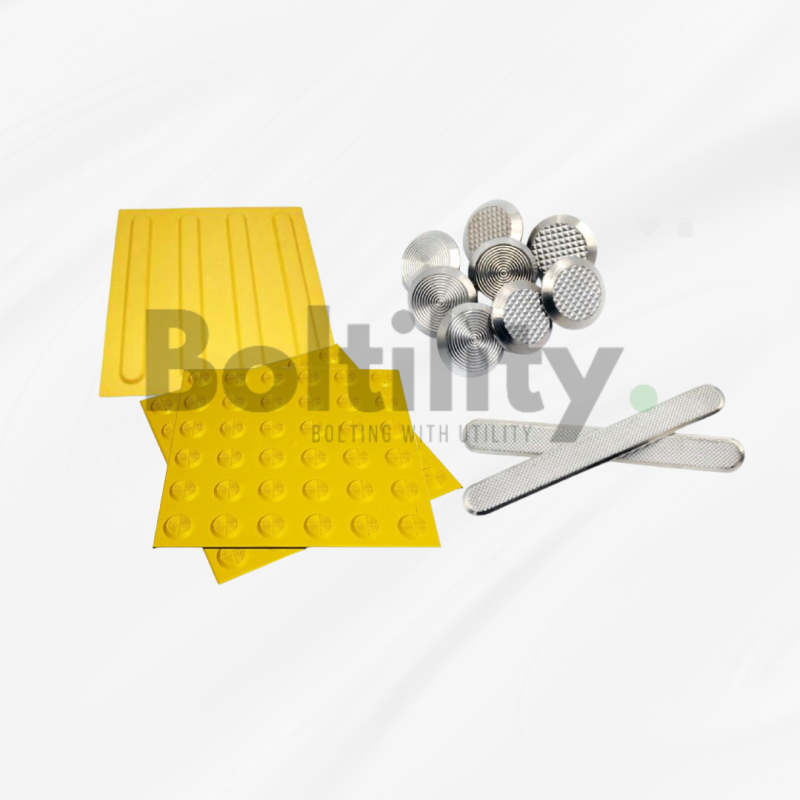
A Tactile Indicator is an important accessibility feature used to provide physical guidance and warning cues for people with visual impairments. Also known as a Tactile Ground Surface Indicator (TGSI), it uses raised patterns that can be detected underfoot or with a white cane.
Tactile indicators are commonly used around stairs, pedestrian routes, entrances, transportation facilities and other areas where clear navigation or warning information is required.
For construction projects, commercial buildings and public spaces in Singapore, selecting and installing the appropriate tactile indicators is an important part of creating a safer and more accessible environment.
What Is a Tactile Indicator?
A Tactile Indicator is a raised surface treatment installed on a walking surface to communicate information through touch.
Unlike ordinary floor finishes, tactile indicators provide specific physical cues that can help a person with visual impairment understand the surrounding environment.
In Singapore, tactile ground surface indicators are generally used as:
- Warning tactile indicators to alert users to hazards or important changes
- Directional tactile indicators to provide guidance along an accessible route
The latest BCA Code on Accessibility in the Built Environment 2025 distinguishes between warning TGSI and directional TGSI.
Types of Tactile Indicator
1. Warning Tactile Indicator
A warning tactile indicator provides a physical warning of a potential hazard, change or important location.
Typical applications include:
- Stairways and steps
- Platform edges
- Pedestrian crossings
- Changes in level
- Hazardous areas
- Important destinations or facilities
Warning indicators commonly use raised dome or stud patterns that can be detected by foot or cane.
The purpose is not simply to decorate the floor. The tactile pattern should communicate meaningful information to the user.
2. Directional Tactile Indicator
A directional tactile indicators helps guide users along a designated route.
Directional indicators typically use raised linear bars or ribs that provide a continuous tactile path.
They may be used in:
- Open public spaces
- Building entrances
- Transportation facilities
- Large commercial buildings
- Corridors
- Pedestrian routes
- Areas where a clear accessible route needs to be identified
The BCA accessibility guidance recognises directional treatment as a means of assisting with direction and locating destinations.
Why Are Tactile Indicator Important?
A properly designed Tactile Indicator system can improve accessibility and navigation for people with visual impairments.
Improved Accessibility
Tactile indicators provide physical information that can supplement visual signs and other navigation features.
Improved Safety
Warning tactile indicators can alert users to hazards such as stairs, platform edges and other changes in the walking environment.
Better Navigation
Directional tactile indicators can help users follow an accessible route through a building or public space.
Inclusive Building Design
Accessibility features such as tactile ground surface indicators contribute to a more inclusive built environment for people with different mobility and sensory needs.
Where Are Tactile Indicator Used?
Tactile indicators can be incorporated into many types of projects.
Commercial Buildings
Shopping malls, offices, hotels and other commercial properties may use tactile indicators around entrances, stairs, circulation areas and other locations.
Transportation Facilities
Transport environments such as railway stations, bus interchanges and other commuter facilities can require clear warning and directional information.
Public Walkways
Tactile indicators may be used along pedestrian routes and at locations where users need additional physical guidance or warning.
Schools and Educational Facilities
Schools, universities and other educational buildings can incorporate tactile indicators as part of accessible circulation routes.
Healthcare Facilities
Hospitals, clinics and healthcare buildings may use tactile indicators to improve navigation and accessibility.
Industrial and Commercial Sites
Depending on the design and accessibility requirements, tactile indicators can also be considered for factories, warehouses and other working environments.
Tactile Indicator Materials
Tactile indicators are available in different materials to suit the installation environment and project requirements.
PVC Tactile Indicators
PVC is a lightweight and practical option for many applications. PVC tactile indicators can be available in different colours and configurations.
For projects specifically requiring PVC solutions, see our PVC tactile indicators range.
Stainless Steel Tactile Indicators
Stainless steel tactile indicators are suitable for applications where durability and a clean architectural appearance are important.
Rubber Tactile Indicators
Rubber tactile products can provide flexibility and tactile contrast and may be suitable for selected indoor or outdoor applications.
The appropriate material should be selected according to the substrate, traffic level, environmental exposure, installation method and project specifications.
Tactile Indicator Installation
Correct installation is essential for a tactile indicator to perform its intended function.
Before installation, the contractor or project team should consider:
- Location – Determine where warning or directional information is required.
- Surface condition – Check that the substrate is suitable for installation.
- Layout – Follow the approved project drawings and accessibility requirements.
- Alignment – Ensure directional indicators form a clear and consistent route.
- Fixing method – Select an appropriate adhesive or mechanical fixing system for the substrate and product.
- Surface finish – Ensure the completed installation does not create unnecessary trip hazards.
- Inspection – Check the finished installation against the project requirements.
For major projects, installation should follow the relevant drawings, specifications and applicable Singapore accessibility requirements rather than relying on generic dimensions from an online article.
Tactile Indicators and Singapore Accessibility Requirements
Singapore’s Building and Construction Authority (BCA) publishes the Code on Accessibility in the Built Environment, which establishes baseline accessibility requirements for the built environment.
The current Code on Accessibility 2025 applies to new building works and additions and alterations works to existing buildings.
The 2025 Code includes enhanced provisions for persons with visual impairment, including standardised warning tactile ground surface indicators at stairs.
Because accessibility requirements can vary according to the building, location and application, project teams should refer to the latest BCA requirements and approved project specifications when selecting and positioning tactile indicators.
BCA Code on Accessibility: Code on Accessibility in the Built Environment 2025
How to Choose the Right Tactile Indicator
Choosing the right Tactile Indicator involves more than selecting a colour or pattern.
Consider the following factors:
1. Warning or Directional
First determine whether the application requires a warning tactile indicator or a directional tactile indicator.
2. Installation Location
Consider whether the product will be installed indoors, outdoors, around stairs, along walkways or in a high-traffic area.
3. Substrate
The existing surface may be concrete, tile, stone, metal or another material. The fixing method should be compatible with the substrate.
4. Material
Choose a material appropriate for expected traffic, environmental exposure, maintenance requirements and project specifications.
5. Visual Contrast
Where required by the project design and accessibility requirements, consider the visual contrast between the tactile indicator and surrounding surface.
6. Durability
High-traffic locations may require a more durable tactile indicator capable of maintaining its physical and visual characteristics over time.
Tactile Indicator vs Tactile Paving
The terms tactile indicator, tactile paving and tactile ground surface indicator are sometimes used interchangeably in everyday construction discussions.
However, the important consideration is the function of the tactile treatment.
A warning tactile treatment communicates a hazard or important location, while a directional tactile treatment provides guidance along a route.
For Singapore projects, terminology and installation requirements should follow the applicable project specifications and BCA accessibility requirements.
Common Applications of Tactile Indicator in Singapore
A Tactile Indicator Singapore project may involve:
- Commercial developments
- Shopping malls
- Office buildings
- MRT and transport facilities
- Public buildings
- Schools
- Hospitals
- Pedestrian walkways
- Building entrances
- Staircases
- Public facilities
- Accessible routes
The exact application should be determined based on the building design, site conditions and applicable accessibility requirements.
Why Choose Boltility for Tactile Indicator?
Boltility supplies construction and building products for projects in Singapore.
When sourcing tactile indicators, we can help project teams identify suitable products based on:
- Material requirements
- Installation location
- Application
- Project specifications
- Required tactile pattern
- Indoor or outdoor use
- Quantity requirements
Whether you need a Tactile Indicator, PVC tactile solution or other accessibility-related products, choosing the appropriate product for the project is essential for long-term performance.
Frequently Asked Questions About Tactile Indicator
What is a Tactile Indicator?
A Tactile Indicator is a raised surface feature designed to provide physical warning or directional information, particularly for people with visual impairments.
What are the two main types of tactile indicators?
The two main types are warning tactile indicators and directional tactile indicators.
Where are tactile indicators commonly installed?
They can be used around stairs, pedestrian routes, entrances, transportation facilities, public buildings and other locations where tactile warning or directional guidance is required.
Are tactile indicators required in Singapore?
Accessibility requirements depend on the type of building, project and location. Singapore’s BCA Code on Accessibility provides baseline requirements for accessible buildings, including provisions concerning tactile ground surface indicators.
What materials are tactile indicators made from?
Depending on the product, tactile indicators may be manufactured from materials such as PVC, stainless steel or rubber. The best choice depends on the installation environment and project requirements.
Can tactile indicators be installed outdoors?
Yes. Products can be designed for indoor or outdoor applications, but the selected material and fixing system should be appropriate for the environmental conditions and substrate.
Get Tactile Indicators in Singapore
Looking for a reliable Tactile Indicator supplier in Singapore?
Boltility can assist with tactile indicator solutions for commercial buildings, public spaces, construction projects and other applications.
Contact Boltility to discuss your project requirements, product specifications and quantity requirements.
Boltility – Your Singapore Supplier for Tactile Indicators and Construction Products.